
A stump is the part of a tree job nobody thinks about until it's the only thing left. It sits in the lawn for years. You mow around it, the kids trip over it, and every spring it sends up a ring of shoots or a fresh crop of mushrooms. Skagit yards are full of them: big fir and cedar stumps from trees logged or blown down long ago, maple stumps that won't quit sprouting, alder stumps going soft in the wet. We grind stumps across the county, from farm properties around Conway to tight city lots in Mount Vernon. Grinding is the practical way to get rid of one. A machine with a spinning cutter wheel chews the stump into chips, down below the level of the soil, without digging up half the yard to do it.
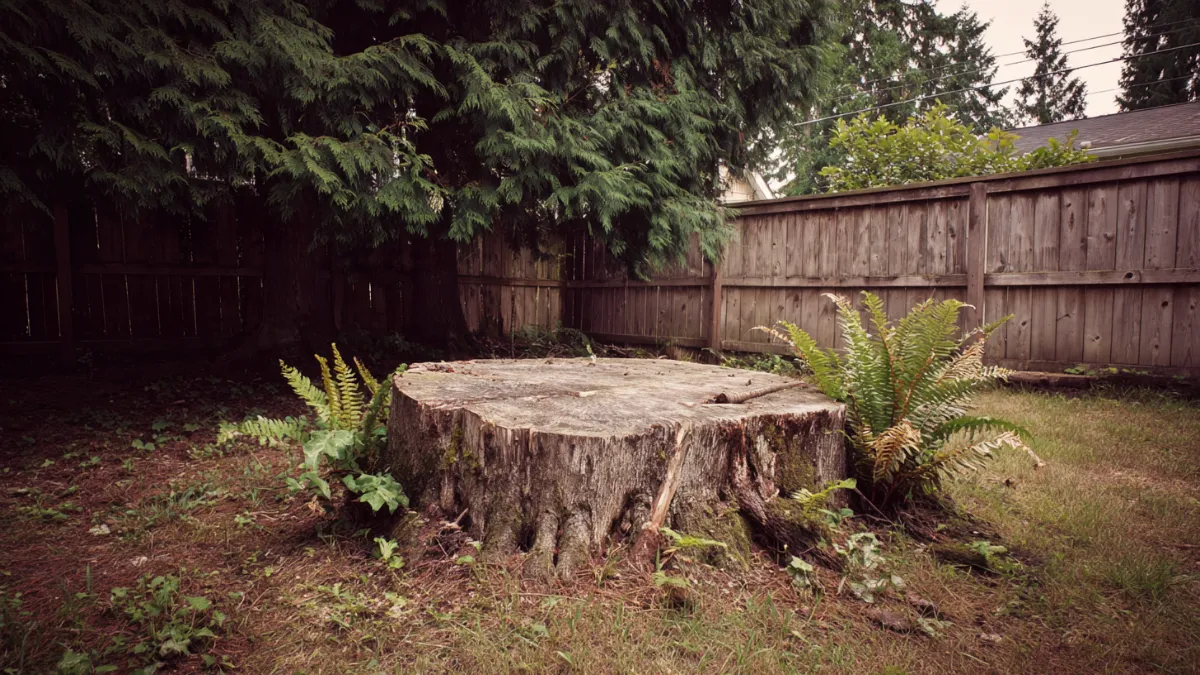
Below, we cover the reasons to take a stump out, the difference between grinding and full removal, how the work goes and what to do with the spot afterward. Stumps left by a blowdown are a special case, since the root plate is often tipped up out of the ground, and those usually start as a storm and emergency call.
Why Take a Stump Out
Some reasons are about convenience and some aren't. A stump in the lawn is a trip hazard and hard on mower blades. It takes up space you could use for a garden bed, a shed or a new tree. Maple, alder and cottonwood stumps resprout, and you can cut those shoots back for years without winning. As a stump rots, it becomes a home for carpenter ants and other insects that like damp wood, which matters more when it sits a few feet from the house. Decay fungi can also live on in an old stump and its roots. That's how laminated root rot lingers in a yard after an infected fir is gone. If the stump is out in the back forty and bothers nobody, leaving it is fine. Near the house, it's worth doing.
Grinding vs. Full Stump Removal: Which One Applies
People use the two terms as if they mean the same thing. They don't. Grinding takes the stump down to somewhere between several inches and a foot below grade, depending on what you plan to do with the spot. The main roots stay in the ground and rot away slowly over the years. It's quick, it's the less expensive option and it leaves the yard mostly undisturbed. Full removal means digging out the whole root ball with an excavator. That leaves a crater, tears up the surrounding lawn and costs a good deal more. Grinding is right for lawn, garden beds and replanting. Full removal makes sense when you're pouring a foundation, a driveway or a slab over the spot and can't have wood decaying underneath. For most homes, grinding is the answer.
How the Grinding Goes
Before we come out, underground utilities get located. In Washington that starts with a call to 811, and it's the law before any digging. Private lines the locators don't mark, like sprinkler pipe, yard lighting and anything running to a shop or a well, are worth pointing out to us. On the day, we clear rocks from around the stump, set up guards to catch flying chips and work the cutter wheel back and forth across the stump, a little deeper with each pass. Surface roots that hump up through the lawn can be chased out the same way. An average stump takes under an hour. A four-foot old-growth fir stump is a longer afternoon. For backyards, we use a narrow machine that fits through a standard gate.
What Happens to the Spot Afterward
Grinding leaves a pile of chips mixed with soil, usually more than people expect. You have choices. We can haul the grindings away, or leave them for you to use as mulch around shrubs and trees. For lawn, the hole should be filled with topsoil and seeded, since chips alone will settle and rob nitrogen from new grass as they break down. Expect the spot to sink a bit over the first year or two as the old roots decay, and plan to top it up. If you want a new tree, plant it a few feet to the side instead of dead center. The soil there is easier to dig, and the young roots won't be competing with a mass of rotting wood.
If the tree is still standing, we can handle both jobs in one visit, with tree removal first and the stump ground out right behind it.
Common Questions
Most of the time. Skagit yards are soft for half the year, and we plan for it with ground mats and lighter machines that don't rut the lawn. Saturated soil makes the grindings muddier and heavier, so cleanup takes longer, but the stump comes out the same. If the yard is under standing water, we wait for it to drain. Low spots near the river and on the flats sometimes mean scheduling for a dry stretch.
Yes, and we see plenty. Old-growth cedar and fir stumps, some with springboard notches still cut in their sides, are scattered across Skagit properties. Cedar resists rot, so these can be solid a century later. They're big, often several feet across, so they take longer and cost more than a typical yard stump. Some owners keep them as a piece of history and grind only the ones in the way. Either is a fine call.
Mostly by size, measured across the widest point at ground level, including any flared roots. After that it comes down to access, the kind of wood, how deep you want it ground and whether we haul the grindings. Several stumps in one visit cost less apiece than one alone. We'd rather look than guess, so we measure before we quote.