
Mount Vernon is really two towns when it comes to trees. Down on the west side and around downtown, the ground is river floodplain: flat, deep soil with a high water table, where cottonwoods and big maples grow fast and root shallow. Up the hill to the east, through Hillcrest and out toward Little Mountain, it's glacial till under a thin layer of topsoil, covered in second-growth Douglas fir that came up after the old timber was logged off. Those firs are tall now, a lot of them a hundred feet or better, and many stand in neighborhoods that were carved out of the woods around them. Each time a lot gets cleared, the trees left at the edge take wind they never had to face before. That's where many of our Mount Vernon calls come from after a storm.
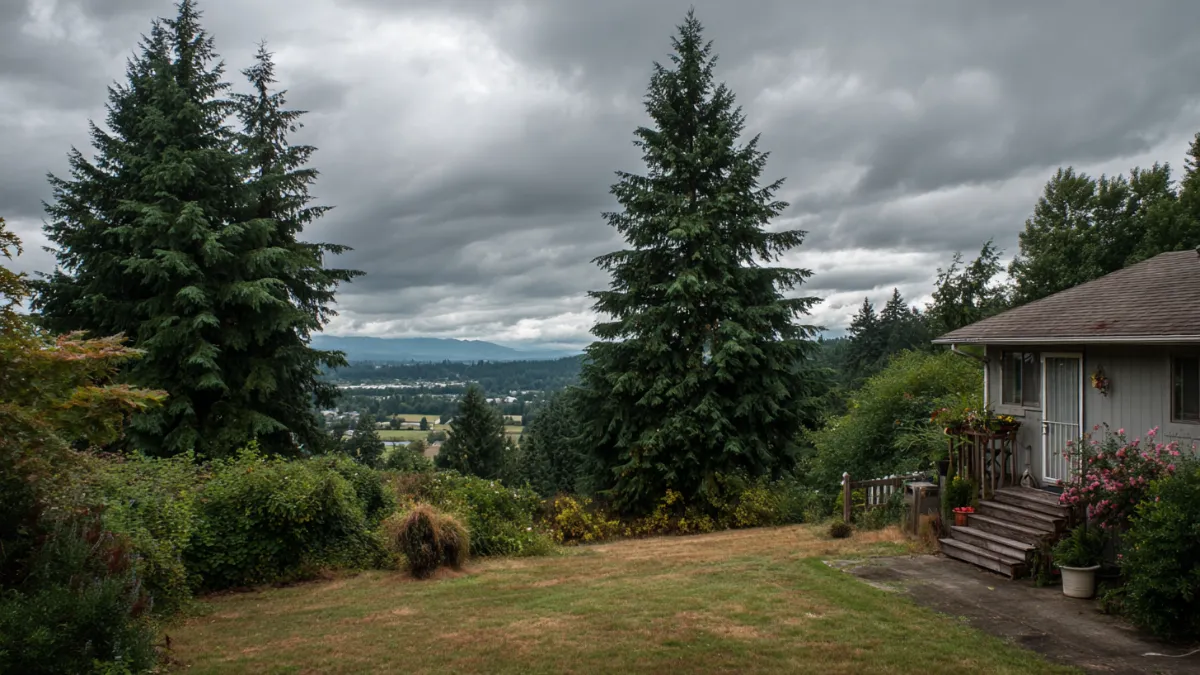
We handle the full range of tree work in town. That includes tree removal when a fir or cottonwood has become a risk, and a hazard tree assessment for homeowners who'd like to know where they stand before winter. If you've got a tree you're unsure about, call us and we'll come take a look.
Street Trees and City Rules in Mount Vernon
Mount Vernon has an urban forestry code, and two parts of it are worth knowing. The first covers the strip between the sidewalk and the street. Unless the tree is on the city's own maintenance list, the homeowner next to it is responsible for its care. But you can't just cut. Removing a street tree, or doing major pruning on one, takes written permission from the parks director, and the code counts any cut on a branch two inches thick or more as major. The second part is topping. The city bans it as a normal practice on public property and strongly discourages it on private land. The city can also order a dead or diseased tree on private property removed if it endangers people or property. We work with these rules all the time, and we'll tell you up front whether your job needs the city's sign-off. Homes down the valley in Conway sit outside city limits and follow county rules instead.
Fir on the Hill, Cottonwood on the Flats
The two halves of town need different work. On the east hill, most of what we do is fir work: cleaning out dead limbs, checking for root rot where one tree in a group has already gone down, and taking out trees that lost their shelter when the lot next door was cleared. Thin soil over hard till means roots spread wide instead of deep, and a soaked winter loosens their hold. On the flats near the river, it's cottonwood and bigleaf maple. Cottonwoods get enormous in that soil, and they shed big limbs in summer as well as winter, sometimes on a still day. Old maples near downtown tend to be hollow at the base long before they look sick. For trees like these, regular pruning buys years of safe life. The same goes for the lakeside lots a few miles southeast in Big Lake.
Mount Vernon Tree Questions
For light pruning, no. For anything the code calls major pruning, yes. That means cutting branches two inches or more in diameter, cutting roots, or taking off more than ten percent of the tree's foliage. Removal also needs written permission from the parks director. Planting a new street tree takes a permit too, though there's no fee for it. We'll walk you through the request as part of the job.
Trees that grow up in a group share the wind load, and each one grows just enough root and trunk to stand with the others. Take away the outer trees and the ones left behind face full wind with a structure built for shelter. The risk is highest in the first few winters after clearing. If a neighboring lot was recently logged or built on, it's a good time to have your edge trees inspected.