
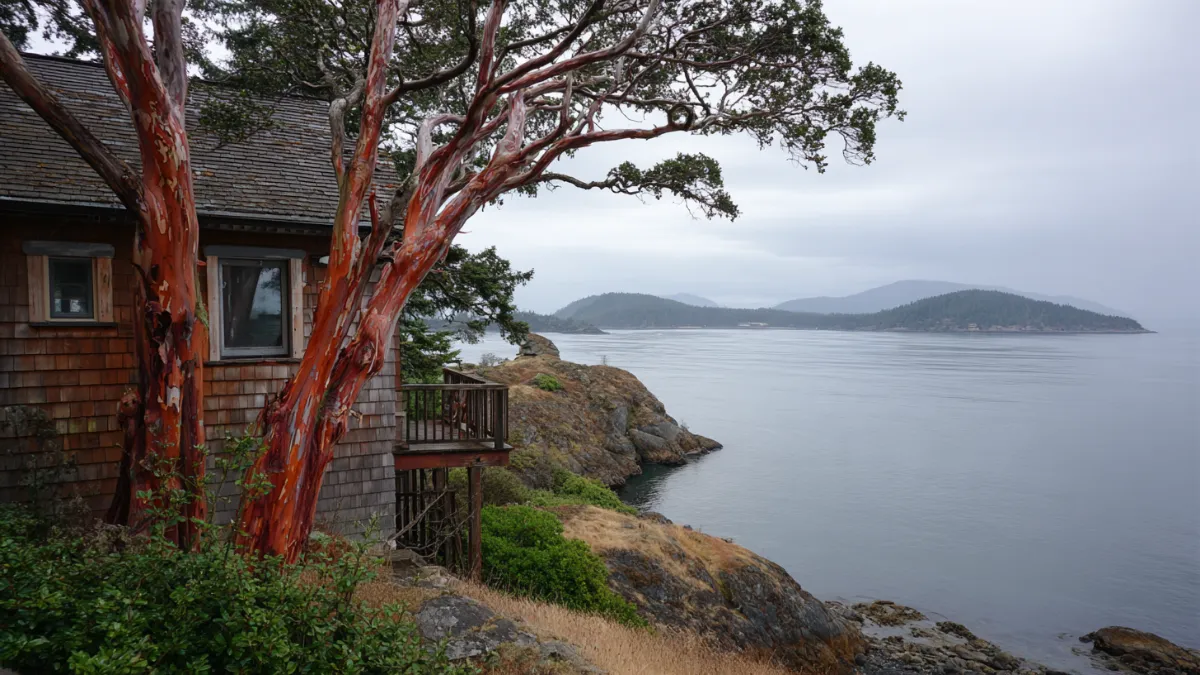
Anacortes is an island town, and its trees live an island life. Fidalgo is mostly bedrock with a thin skin of soil, surrounded by salt water and open to wind off Rosario Strait and Guemes Channel. Douglas firs here grow slower and stockier than they do in the valley. Madronas lean out from the bluffs with their peeling red bark. Shore pines hang on where little else will. Thousands of acres of community forest sit right behind the neighborhoods, so in places like Skyline, Cap Sante and the streets below Mount Erie, big trees and houses are close neighbors. Roots can't go deep in this ground. They spread across the rock and grip what they can, which works fine until a hard wind hits from an unusual direction.
We do a lot of careful work in Anacortes: view pruning for homes on the water, storm and emergency tree service after a blow, and tree removal on lots where rock, slope and tight access make every step slower. Tell us what you're dealing with and we'll come out and look.
Views, Bluffs and Shoreline Rules
Half the pruning calls we get from Anacortes involve a view. The right way to open one is selective. We remove chosen limbs to make a window through the canopy, or raise the lower branches so you see under the tree. Topping a fir to see over it leaves a decaying stub and a tree that grows back weaker and bushier. On bluff properties, there's more at stake than looks. Tree roots hold thin soil on steep ground, and the canopy catches rain before it reaches the slope. Take the trees off and the bank can start to move. That's part of why trees near the shoreline and on steep slopes are regulated, and why Anacortes has a tree preservation chapter in its code covering removal and topping inside city limits. We check what applies to your lot before we cut. Waterfront owners across the flats in La Conner face similar shoreline questions.
Madronas, Wind and Thin Soil Over Rock
Madronas are the tree people ask about most. They're beautiful, they're native and they're touchy. Many on Fidalgo carry leaf blight or cankers, and a rough-looking madrona isn't always a dying one. They resent heavy pruning, root disturbance and summer watering, so the best care is often a light hand: dead wood out, weight off a long lean, and the rest left alone. Firs on the island have their own pattern. With roots spread shallow over rock, they depend on each other for shelter, and trees left standing alone after a lot is cleared are the first to go in a storm. Wind exposure here is real. A tree on the west side takes weather straight off the strait. If you're unsure about one, a hazard tree assessment will tell you what the roots and trunk are doing before the next blow.
Anacortes Tree Questions
Most are dealing with fungal leaf blight, which browns the foliage after wet springs, and many carry trunk cankers that kill branches a few at a time. A tree can look terrible in April and push healthy new leaves by June. What matters is the trend over several years and the condition of the trunk and roots. Avoid watering, fertilizing or digging near one. If large sections are dying back or the tree leans toward the house, have it looked at.
Possibly. Anacortes has a tree preservation chapter that covers removing and topping trees inside city limits, and lots near shorelines, wetlands and steep slopes have extra rules. What applies depends on your property and what you're planning. We don't guess. Before any removal in the city, we confirm the current requirements for your address and tell you what we learned.